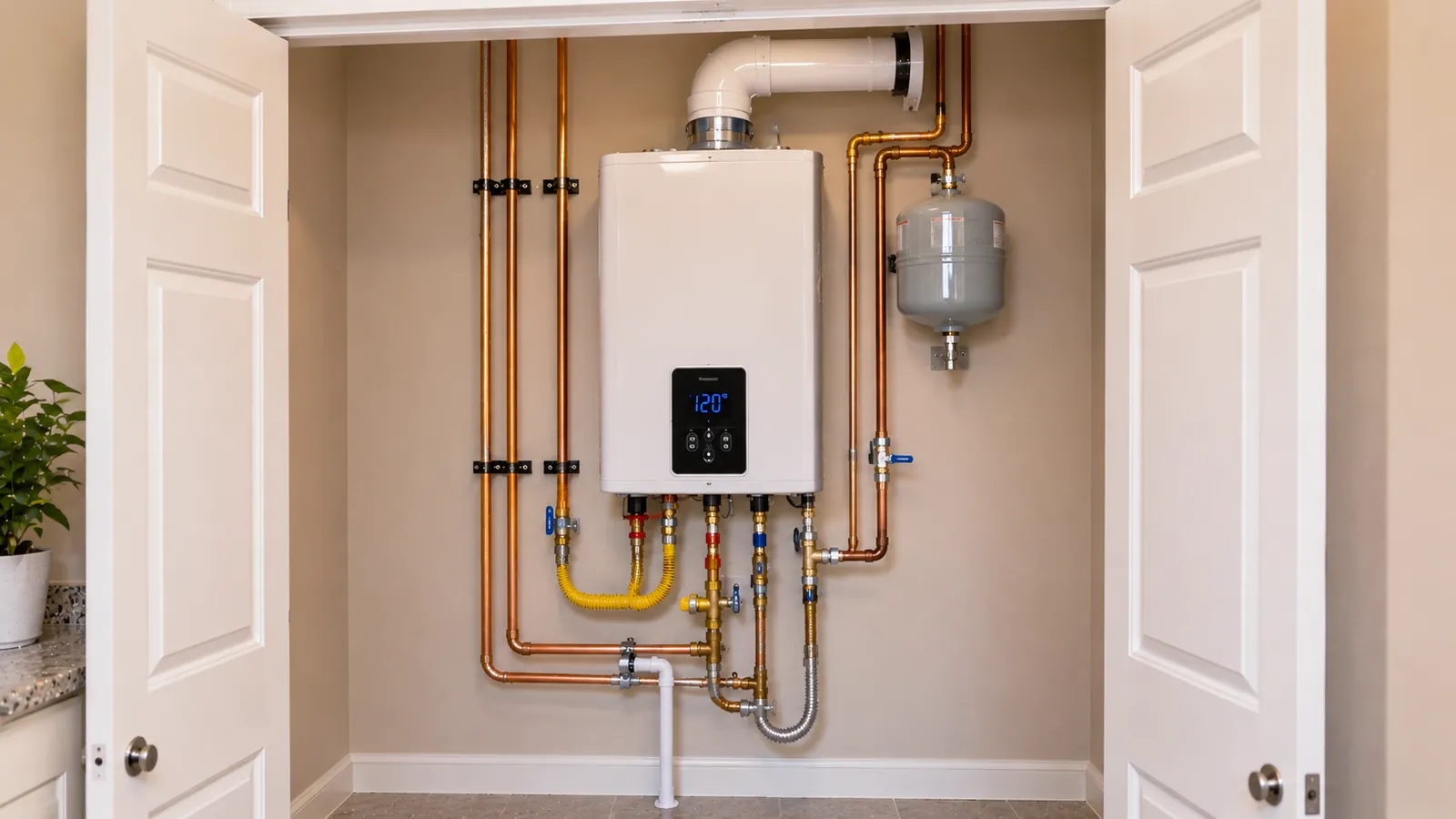
Three things that make or break a tankless install
1. Gas supply
A whole-house tankless unit can burn close to 200,000 BTU when every tap is open, several times what a 40,000 BTU tank burner uses. Many Rio Rancho homes have a gas line sized for the old tank, so we measure the run and often upsize it from the meter.
2. Venting
Condensing tankless heaters vent through PVC, sidewall or roof. We plan the termination away from windows, doors and the neighbor's fence.
3. Elevation
Most of the city is a mile up or more. Thinner air means less oxygen for combustion, so most tankless manufacturers require an altitude setting or adjustment. Skip it and the unit can run rough, throw error codes or fall short of its rated output. Read more in our high altitude tankless guide.
Hard water and tankless
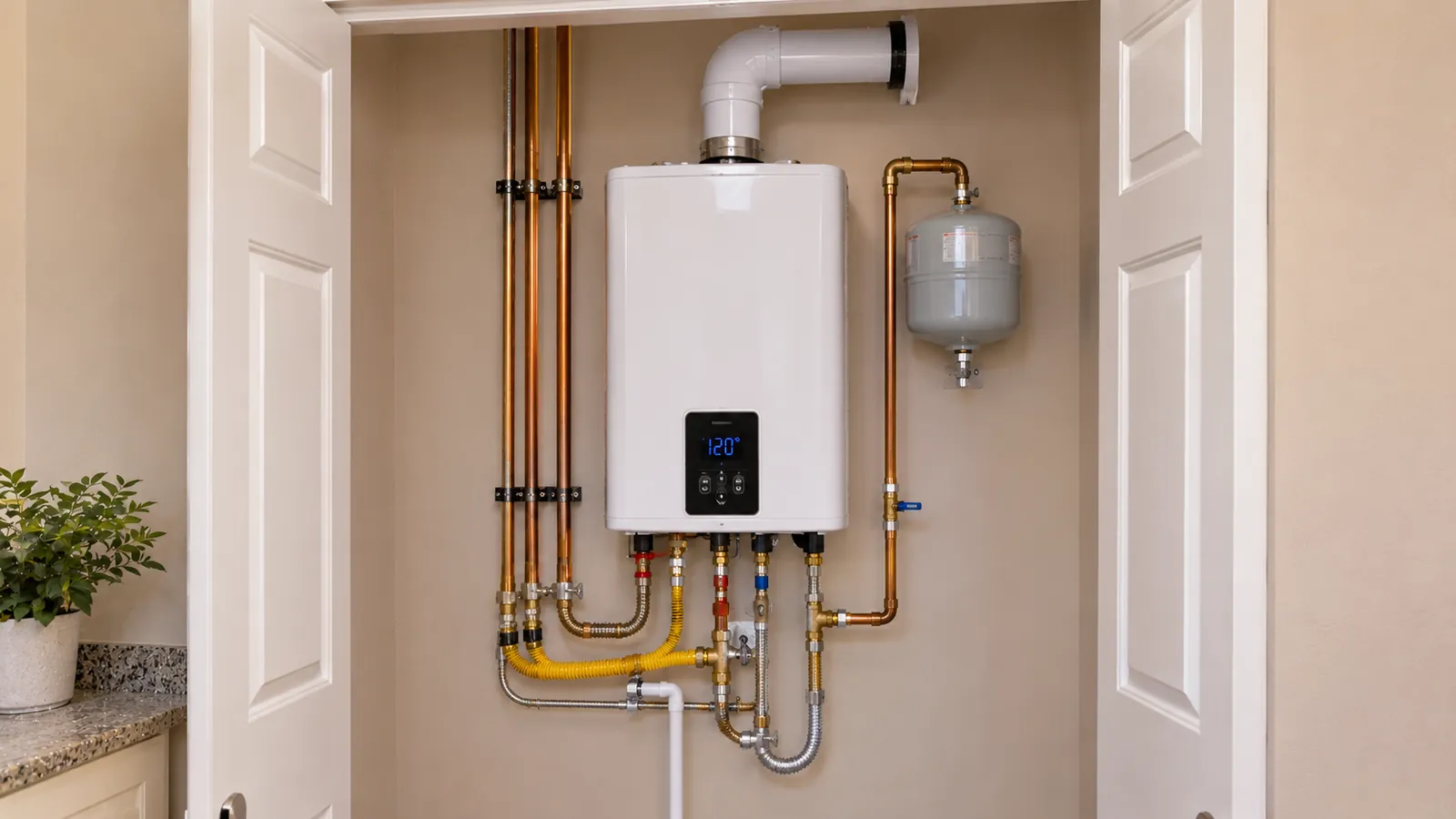
Rio Rancho's mineral-heavy water scales the heat exchanger over time. We install isolation valves so the unit can be descaled, and recommend a yearly flush or a softener or scale filter upstream.
Instant hot water at the far bath
Tankless doesn't make hot water arrive faster at a distant fixture. If you wait at the master shower now, ask about a recirculation setup.
Rebates
New Mexico Gas Company offers rebates on qualifying high-efficiency tankless units. See water heater rebates in Rio Rancho.
Common questions
Is tankless worth it in Rio Rancho?
For larger households and long-term owners, usually. The upfront cost is higher than a tank, but you get unlimited hot water and a longer service life.
Can my existing gas line run a tankless?
Sometimes. We measure the length and pipe size; many homes need an upgrade.
Which tankless brands do you install?
Rinnai, Navien and Noritz are the most common.